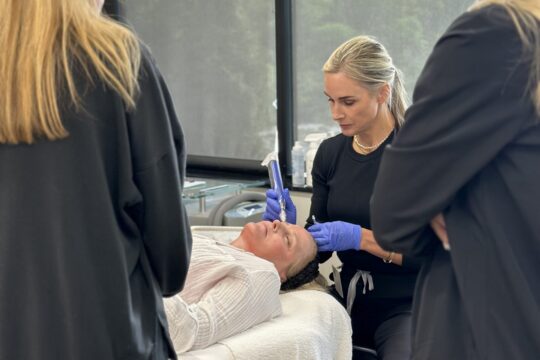

In 2023, our sister company, AesthetiCare, moved into a 20,000-square-foot space. Not only was the expansion transformative, but the attention to detail in every aspect added a level of optimization rarely considered by other practices. Now, three years later, we asked our general manager, Tracie Duke, what her biggest takeaways are when it comes to designing a medspa layout.
At MINT Aesthetics, we’ve spent over two decades helping medspa owners build and scale their practices. Our unique position of operating AesthetiCare alongside our training and consulting business means we’re not just teaching theory. We’re sharing lessons from a clinic that has experienced 17 consecutive years of double-digit growth.
When Tracie talks about design decisions, she’s speaking from the perspective of someone who lives with those choices every single day.
Why Clinic Layout Matters
Your clinic layout affects more than just the way patients move through your space. It influences their perceptions, their comfort and even their buying behavior. According to the American Med Spa Association, the most profitable practices dedicate roughly 70% of their floor space to revenue-generating activities, leaving only 30% for support areas like storage and hallways.
That ratio alone should tell you how much thought needs to go into every square foot.
If you’re designing or renovating a medspa, the decisions you make now could shape your business for years. Here’s what actually matters, and what you can safely deprioritize.
1. Design for Where You Want to Be, Not Where You Are
We asked Tracie about the biggest mistake she sees clinic owners make when designing the layout of a medspa. Having been in the business for several years, her answer came immediately.
“Don’t focus on designing the space for where your business is today,” she said. “Think about where you want it to be in three years. Would you add lasers, expand injectables, or bring in additional treatments? Make sure your rooms can be easily interchangeable as you grow.”
This same forward-thinking approach shaped many of the decisions at AesthetiCare’s new headquarters. Rooms were built to serve multiple functions over time: a consultation room today might become a treatment room next year, while office space could eventually be used to house equipment. At every step, the infrastructure was thoughtfully planned to accommodate growth without requiring a complete renovation.
“You don’t need to have the space now, nor should you overextend your budget to accommodate these goals, but it’s important that you’re not designing a layout that will quickly place limits on what your clinic can do in the future,” Tracie explained.
What This Looks Like in Practice
Install the appropriate outlets and infrastructure during your initial build-out, even if you don’t currently need them. A standard treatment room for basic aesthetic services typically ranges from 90 to 120 square feet, but rooms that will eventually house lasers or other devices should be 120 to 140 square feet with up-to-code electrical already in place.
2. Invest in the Lobby, Be Strategic Everywhere Else
The reception area is where patients form their first impression and where they anticipate their appointment, so it plays an outsized role in how your practice is perceived. It’s worth being more intentional about how much of your budget goes here, but Tracie is quick to point out that impressive doesn’t mean expensive.
“For the lobby, invest a bit more so it creates that ‘wow’ factor without going overboard,” she said. “Focus on timeless design, clean spaces, and good furniture. Your clients should be comfortable while waiting for their treatments.”
She paused before adding, “Getting the ‘wow’ factor right doesn’t mean commissioning a $5,000 art piece to hang in your lobby. Design over decor, always.”
The distinction between design and decor is important. Design refers to the architectural and functional choices that shape how a space feels: the lighting, the furniture quality, the layout, the materials. Decor refers to the decorative items layered on top. One contributes to the patient experience in a lasting way, while the other looks nice and can help elevate the space, but ultimately, is just filler.
Where to Pull Back
“Treatment rooms, hallways, and back areas can be more budget-friendly,” Tracie noted. “They require less decor, less furniture and ultimately, less investment.”
These spaces need to be clean, functional and efficient. They should support your providers in doing their jobs well, but don’t need statement pieces or designer finishes. A treatment room with a stable bed, proper storage and flattering ambient lighting contributes far more to the patient experience than an expensive sculpture in the corner.
3. Know Who You’re Hiring Before You Finalize Your Floor Plan
Your staffing model directly affects your equipment needs and room configurations, so it’s best to know what your team will look like before finalizing your floor plan. Tracie put it simply: “Who are you hiring? Just injectable nurses? Or a combination of aestheticians and nurses? This will help determine your equipment budget.”
If you’re bringing on aestheticians to perform facials, peels and skincare treatments, your equipment costs may be lower, but your treatment rooms will need different setups. If you’re adding lasers, you’ll need larger rooms with proper electrical infrastructure and ventilation. Medical-grade lasers are class IV devices, capable of causing severe burns or damage if used improperly, which means your treatment room becomes a nominal hazard zone. Doors must remain closed, windows covered, and protective eyewear available at every entrance.
“If you need to invest in equipment like lasers, your costs may be higher,” Tracie acknowledged. “However, remember that nurses are paid more than aestheticians, so there is a balance between cost of labor and cost of equipment. Be conscious of both.”
Finding the Right Balance
The point Tracie is making comes down to trade-offs. Higher labor costs in one area might mean lower equipment costs in another, and vice versa. If you’re building out a clinic, you need to weigh these decisions before you finalize your floor plan. The staffing model you choose will dictate the infrastructure you need, and retrofitting later is always more expensive than planning ahead.
4. Invest in What Actually Generates Revenue
This was the point where Tracie became most direct.
“Invest in what will actually generate revenue. You don’t need expensive artwork everywhere. It’s not going to make you money,” she said. “Your team and your devices drive all revenue. Make sure you have highly trained team members. Invest in equipment that has proven results, even if it’s more expensive.”
She also discussed the details that many practice owners overlook.
“Do your treatment beds wobble when clients lay down? Are your bathrooms consistently functional and clean? These things will always take priority over the art on the walls or the statues in your lobby.”
Her final verdict on the subject was characteristically blunt.
“More decor is never the answer.”
The Small Details That Matter
Before you allocate a budget to decorative elements, walk through your clinic with fresh eyes, as if you were a new patient. Sit in the waiting room chairs. Lie on the treatment beds. Use the bathrooms. Notice the lighting. What is the impression you get? These are the key touchpoints that shape how someone feels about your practice.
5. Make Retail Impossible to Miss
Retail is a revenue stream that many clinics underutilize, often because of poor placement. “Your retail area should have a strong presence,” Tracie said. “Even if clients can’t afford certain treatments, you can still support their results and drive revenue by having them invest in skincare.”
The design of AesthetiCare’s retail area was one of the thought-out decisions in the entire build-out.
“One of the most intentional design points of our clinic was the placement of the retail section. Every single client, regardless of the treatment they are receiving, must walk past the retail wall twice,” Tracie explained. “This gives every provider ample time and opportunity to discuss products and educate the client on what is recommended for their skin goals.”
But she emphasized that visibility isn’t enough on its own.
“Make sure clients have clear, direct exposure to your retail area. This includes making sure your providers discuss their at-home care plan at each appointment. You’ll see a big change in your retail sales!”
Making Retail Work
Position your retail display along the path patients naturally take through your clinic, ideally near the checkout area or between the waiting room and treatment rooms. Use thoughtful lighting to draw attention without overwhelming the space. Backlit shelving works well. Keep displays organized with testers available so clients can interact with products.
The real key, though, is training. When a provider recommends a product immediately after performing a treatment, patients are far more likely to purchase. That recommendation carries weight because it comes from someone who just examined their skin and understands their concerns.
Building a Space That Works
Designing a medspa requires balancing aesthetics with strategy. The visual choices matter, but decisions about flow, flexibility and function are what separate a good clinic from a great one. Every element should serve a purpose, contributing to either the patient experience or your operational efficiency.
At AesthetiCare, these principles were refined over years of operation before being built into our new headquarters. Our 20,000 square foot space in Kansas City is the result of careful planning, lessons learned and a commitment to getting the details just right.
If you want to see exactly how these ideas came together, our Business Blueprints e-course includes an interactive tour of the AesthetiCare Medspa + Wellness headquarters. You’ll get insight into every decision to help you design and refine the layout of your own medspa.
Ready to Make Your Next Move?
At MINT Aesthetics, we’ve worked with over 1,000 clinics across North America, helping medspa owners like you refine everything from clinical protocols to business operations. If you’re planning a build-out, renovation, or just rethinking how your current space functions, we can help. Explore our online courses and Business Blueprints e-course for a behind-the-scenes look at how we designed AesthetiCare. If you’re looking for hands-on guidance with your own space, check out our business consulting options to work directly with our team.