Hiring a new provider is exciting, especially when you’ve found someone with the right credentials and a personality that fits your team. But over the next few weeks or months, how you train your new hire will determine whether they become a team player or a source of frustration for everyone involved.
At MINT Aesthetics, we’ve spent over two decades refining our approach to provider training at AesthetiCare, our flagship medspa in Kansas City that has grown to become one of the largest aesthetic centers in the country. We’ve made mistakes, learned from them, and developed systems that consistently produce skilled, confident providers.
Our insights come directly from that experience, and they apply whether you’re onboarding your first nurse injector or your tenth aesthetician.
Why Training Matters More Than You Think
The aesthetics industry has a turnover problem. Countless practices have invested time and money into hiring, only to watch new providers leave within the first year. While compensation and workplace culture play a role, inadequate training can be the hidden culprit.
When providers feel unprepared, they lose confidence, and when they lose confidence, they struggle to connect with patients, recommend treatments or handle complications calmly. That anxiety builds until they eventually either: 1. burn out, or 2. seek employment elsewhere.
Proper training helps build the kind of deep-rooted confidence that allows providers to thrive under pressure. The initial onboarding process is a key opportunity to set the stage for success, with realistic expectations and timelines that build a strong foundation from the very start.
Setting Realistic Training Timelines
One of the most common mistakes practice owners make is rushing to get new providers on the schedule before they’re ready. The desire to start generating revenue as soon as possible is understandable, but this tactic nearly always backfires.
At AesthetiCare, we have set training timelines to ensure new hires feel prepared, but they vary by role. Nurses typically need six weeks before seeing patients independently, depending on their prior experience, while aestheticians can be ready in two to four weeks if they come with a solid foundation. Having observed (and handled!) hundreds of successful onboardings, these training timelines consistently produce engaged and confident providers.
One way to check readiness is through formal assessments. These check-ins give you objective data about performance while allowing new hires to see the milestones they should be working toward. At MINT, you’ll find a New Provider Training Plan and 90-day performance evaluation template in our Superstar Staffing course to help you navigate this process.
Explore Our Superstar Staffing Course
Learning by Observation
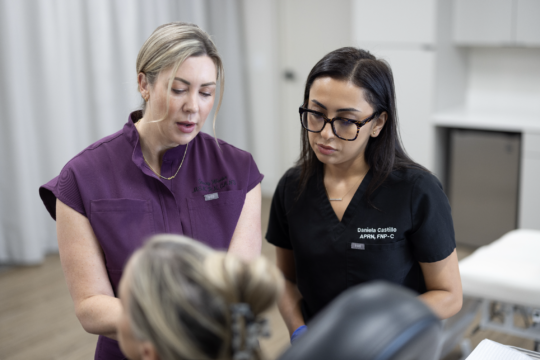
At AesthetiCare, every single new provider we hire begins by shadowing, regardless of their experience. For nurses, we recommend at least one full week of observing high-performing team members before working with any equipment or patients themselves. We use the same approach for new aestheticians, too, albeit on a somewhat shorter timeline.
While shadowing, new providers learn so much more than clinical know-how. They see how your practice handles difficult conversations, manages room turnover, and maintains the energy that keeps the schedule flowing. These soft skills can be harder to teach than laser protocols or injection techniques, so letting them absorb as much as possible during that first week is incredibly valuable. We always encourage new hires to take notes and ask questions, and pair them with different providers to expose them to various approaches.
Read More: Best Practices for Onboarding New Medspa Staff
Mastering the Consultation Process
Clinical technique and knowledge matter, but consultations drive revenue. A provider who’s at the top of the injection game but struggles to connect with patients during the initial consultation will never reach their full potential. This is another area where those soft skills come in handy.
At AesthetiCare, we train all providers on our 9-step consultation process, which covers everything from building rapport and creating treatment plans to recommending services and handling objections. New providers sit in on top performers to observe this process in detail, getting a front row seat to see how we establish trust and credibility right off the bat.
In addition to observation, we always have another provider perform a full consultation on new hires. This role reversal gives them firsthand experience from a patient’s perspective, helping them understand how it feels to be on the receiving end of recommendations.
Explore Our Perfect Consultation Course
Hands-On Experience: The Right Way
Eventually, observation must give way to practice. The transition matters enormously.
We encourage new providers to receive every treatment they’ll be performing. This real experience teaches them what the patient will feel during the procedure, what normal post-treatment looks like, and how to describe the experience authentically. A provider who has personally experienced a HALO laser treatment can talk about it with genuine authority.
After undergoing various treatments comes supervised practice on friends, family, and staff members, allowing new providers to refine their technique in a low-stakes, unpaid environment. Only after demonstrating competency in these practice sessions should providers begin treating patients, initially under close supervision.
Other Tips for New Provider Success
Leverage External Training Resources
Your vendors are valuable training partners. Most injectable and device companies offer complimentary training sessions, and smart practice owners take full advantage. Reach out to your reps during the onboarding process and schedule whatever training they can provide.
Industry conferences and seminars offer another avenue for continued education. While these may not fit into the initial onboarding timeline, budgeting for conferences like the Global Aesthetics Conference (GAC) or the Multispeciality Aesthetics Conference (MAC) exposes your team to new ideas and keeps them current on emerging techniques.
Online education fills the gaps between in-person training opportunities. MINT’s e-course library, for example, covers clinical topics across the aesthetic spectrum and allows providers to learn at their own pace. Assigning specific courses during onboarding ensures all providers share a common knowledge foundation.
Create a Resource Manual
New providers face an overwhelming amount of information. Names of treatments, contraindications, pricing structures, provider schedules, consent form locations, post-care protocols… the list goes on.
At AesthetiCare, we solve this with a comprehensive resource manual that contains everything a new hire needs to thrive. This living document includes bragging points about the clinic, contraindications for each treatment, numbing protocols, payment methods, membership information, current promotions, and treatment overviews with key details.
Having this resource available reduces anxiety and prevents the constant interruptions that frustrate new providers and their busy colleagues. Update your manual regularly as treatments, pricing, and protocols change.
Avoid Common Training Pitfalls
Several habits can sabotage otherwise solid training, like putting new providers on the schedule too early. If your new injector or Hydrafacialist feels underprepared, it can lead to negative patient experiences and bad reviews that damage your reputation more than the short-term revenue helps your bottom line.
Inconsistent training is another pitfall we see a lot. When different providers teach conflicting techniques or protocols, new hires become confused about what’s actually expected.
Standardize your training materials and ensure all trainers are aligned on key procedures.
Neglecting soft skills in favor of clinical technique is a third pitfall. Injection skills are teachable. A genuine desire to help patients, the ability to read body language and the instinct to build rapport are harder to develop. Hire for personality and attitude, then invest in clinical training.
Finally, avoid the trap of one-and-done training. Yes, initial onboarding lays the foundation for a strong start, but continuing education keeps both new and seasoned providers sharp. If you only have one takeaway from this article, let it be this: budget for and implement ongoing training, and incorporate it into your SOPs.
Build Your Training Program With MINT
If onboarding a new provider feels daunting, we can help. At MINT, we offer training that helps practices like yours build effective processes. Our online e-courses cover clinical and business topics across the entire aesthetic spectrum, from beginner to advanced, while virtual sessions are completely customized to address the gaps that are holding you back.
The practices that succeed long-term are the ones that treat training as an investment rather than an expense. Your providers are the face of your brand and the hands delivering your treatments. They deserve training that prepares them for success, and your practice deserves the results that well-trained providers deliver.
If you’re ready to elevate your training and your practice, we’re here to help. Subscribe now to explore our e-courses or book a call with our team to learn more.